
Secret Tibet - by Fosco Maraini
- Phoenix Amata
- Jul 17, 2024
- 3 min read

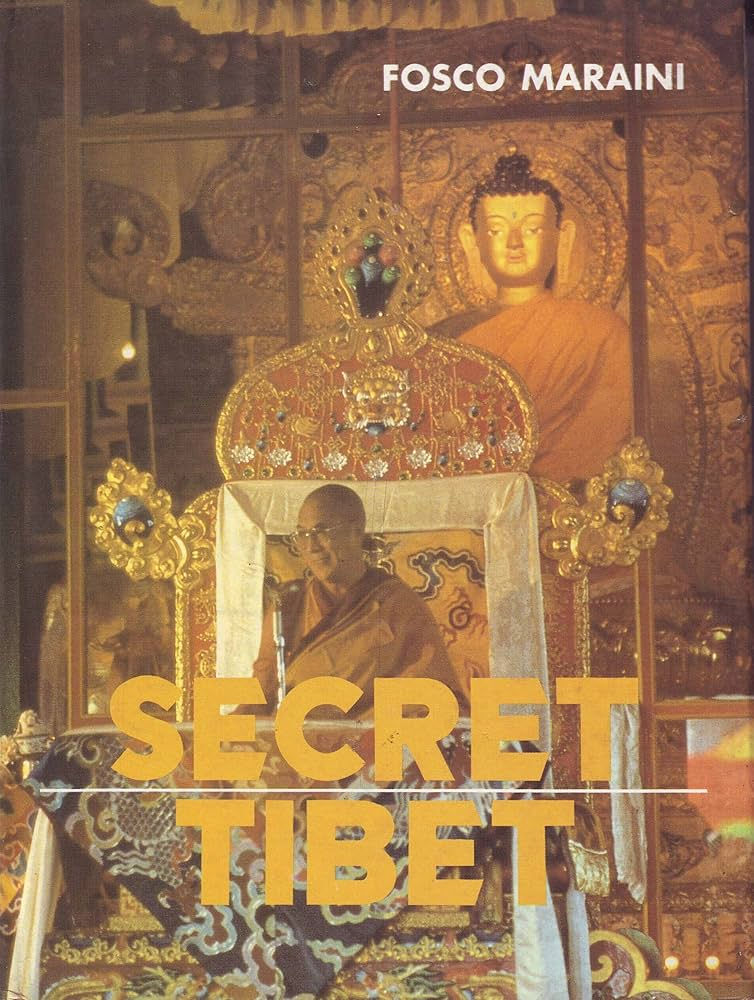

From a book reviewer:
I first learned of Fosco Maraini's travels to Tibet (though he was denied official permission to enter Lhasa), from his daughter, Dacia, at a literary evening. Though I realize I am reading this book nearly six decades after it first came to print, it is as fresh and alive for me today as it would have been then. Fosco Maraini is a masterful writer who can capture the most delicate nuance as commonplace, so everyone can see it. The writing is breathtakingly beautiful.
I will give a small example here, towards the end of the book. It is his last evening at Gangtok, the southernmost gateway to Tibet just north of Sikkim, India, where their travels are coming to an end. After a day of rain, the moon appears through the clouds:
"A faint, ethereal --I should like to call it silent-- curve of light emerges imperceptibly from the dark abysses of the forest and stretches across the sky to fade equally imperceptibly into the patches of light reflected from the roofs above the temple and the palace, where Pema Choki lies asleep with her black hair on a white pillow. It is only the ghost, the memory of a rainbow, the faintest suggestion of pink and blue tones, to be guessed at rather than seen, suspended between one nothing and another in the darkness of the night."
This is poetry. Such sublime imagery is throughout the near three hundred pages (hardback), which makes it an absolute delight to read. One learns that Fosco was rather fond of Princess Pema, her picture is in the book too, and that their spirited talks and laughter bordered on flirtation. But she was a princes respected, intelligent, and certainly lovely. His friendship was genuine. But he also as an anthropologist and photographer, and masterful writer, displays the subtleties of material and spiritual Tibet, which he brings to the forefront with finely composed imagery that enlighten us almost as if being there. His many personages he writes about become real for the reader, the tall well formed Tibetans from their vast valleys, the eccentric artists or officials or recluses, village friends and their yak butter tea, sacred ceremonies and dance, quiet little Nepalis busy as industrious bees, the mysterious Hindus, and proud almost arrogant Moslems, all contrast with the stiffly dressed administrative, rational Europeans carrying on business of state. But that condition was about to change, as India broke away from the British Empire, and China was barreling headlong (unbeknown to Maraini then) towards Communism... which in the end extinguished a whole way of life, a Tibet of Feudalism and monasteries, of free nomads and monks and lamas, that may never be again. In that, this book is a valuable 'archeological' treasure of a people and a culture that lasted over a thousand years, and now except for remnants in exile, has largely vanished. Maraini captured it like a artist's black and white still-shot with all the elements of a well composed, masterful photograph that draws you in into its hidden mysteries. I feel rewarded inside, and though I had never been to Tibet (Nepal was closest) I will now scheme to get there, whether in person or in spirit, to taste that Tibet Maraini and his mentor, Prof. Giuseppe Tucci, felt in their soul. It was the end of an era, an ancient, mysterious, dramatic, sacred and profane, all too human free way of life. Secret Tibet brings it back for us.
Truly well done, Signor Maraini. It is one of the few books where upon finishing it I wanted to stand up and applaud. Bravo!


Comments