
Massimo Scaligero on Julius Evola
- Phoenix Amata
- May 16
- 5 min read

Updated: May 16
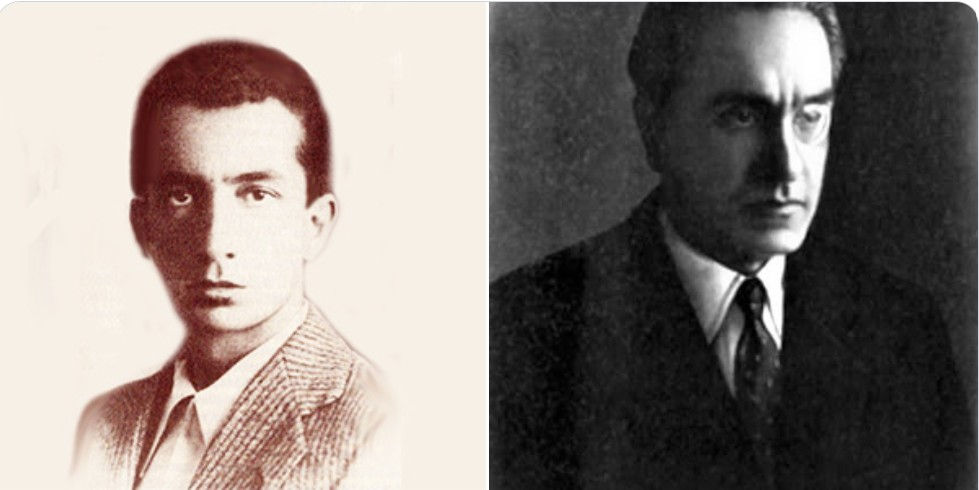
Massimo Scaligero on Julius Evola
I met Evola at a time when nearly everyone was distancing themselves from him. Through La Torre, he had become the boldest critic of the Regime’s cultural ideals. Even while a void formed around him, he continued attacking relentlessly. This attracted me, though I did not yet understand his true aim. In the spring of 1930, despite warnings from respectable friends, I went to visit him.
I was curious about the man Adriano Tilgher had called “the most powerful dialectician in Europe.” Evola was famous for his victories in intellectual debates at the “Association for Moral and Religious Progress,” where he consistently defeated professors and intellectuals through incisive dialectic and ironic wit.
When I first met him at Corso Vittorio 197, he appeared tall, calm, almost “Buddhic and Olympian.” Realizing I had come with no political or esoteric purpose, he welcomed me warmly. That sympathy became the force connecting us for years beyond doctrine or dialectics.
At the time, I did not know Evola directed an esoteric group. I myself had followed a deeply personal path between Yoga and radical Western thinkers such as Nietzsche and Stirner. What united us immediately was the theme of mountains, solitude, silence, and inner ascent.
The significance of Evola for me was the encounter with a living form of thought. I felt all contemporary culture to be spiritually dead, like a vast cemetery. Through meditation I escaped this suffocation, but in Evola I encountered a thought still capable of life and freedom. More than the content of his writings, what impressed me was their character as an entirely personal creation: an organic and dazzling work of art.
Our affinity was essentially contact with a world of forces. Yet gradually I recognized the origin of these forces differently than he did, and this eventually led me away from his path. Reality is one; truths are many.
Dialogue with Evola sharpened my need to distinguish among traditions and values. It shaped my reflections on karma, reincarnation, alchemy, the Grail, and the Logos as Christ-Principle. I understood Evola’s paganism as a search for the Logos beyond corrupted religious or political forms.
Evola was a “strong medicine,” a shock remedy, representing force without mediation. Through him I encountered a decisive inner experience: the feeling of liberation, heroic and mythical rather than cognitive. Later I realized I required a cognitive path. Evola’s teaching appeared cognitive, but fundamentally relied on the feeling of force rather than the direct grasp of reality through the power of the Idea.
One does not enter the magical through emotion or dialectics, but through a primordial power in the soul itself. Evola distrusted thought and “the path of thought,” regarding thought as tied to human sensibility rather than transcendence. Yet one cannot avoid beginning from thought and transforming it into living will.
For Evola, the ideal of the absolute individual expressed a self-sufficient will. In his yoga, awakened will became the current of Kundalini. The power of his persuasion lay in this immediacy of possessed will. He rejected mediation, speaking always of an absolute act already magical in itself.
Still, Evola’s insistence on the invincibility of the Ego confirmed my own experience. Pursued deeply enough, the Ego must encounter the Logos, its own source—something Evola himself did not recognize. I appreciated him because he articulated, more explicitly than anyone before him, the asceticism of the Ego.
For a time I believed I had found the master I sought. Yet precisely because I followed the “path of the Ego,” I could no longer follow his road. Evola was an immensely powerful individuality, but his force could become dangerous for followers lacking inner autonomy. What in him was strength could become dependency in others.
My relationship with him differed from that of most followers. I had gone to him without reading his books. Our conversations revolved around mountains, anticonformism, courage, and resistance to pseudo-culture. At times I even organized rough Roman friends to accompany him when he feared physical attacks during legal disputes.
He once lent me Meyrink’s The Golem, probably hoping to establish an esoteric bond, but I felt little interest and quietly returned it unread. Only later did I study both Meyrink and Evola seriously.
What truly clarified my path was meeting disciples of Rudolf Steiner connected to the journal Ur, especially Colazza, and eventually Steiner himself, whom I recognized inwardly as a master of the new age. Evola respected Colazza deeply, considering him an extraordinary experimenter in occult practice.
Colazza criticized Evola mainly for writing books. “One of us should not write books,” he once told me. “Books bind the author to his present thought and prevent openness to the unknown.” There is truth in this, yet Evola’s sacrifice through writing also had meaning: compromising his own path to awaken others.
Evola never truly acted as a “master.” He was an awakener and orienter, but when I sought practical guidance he directed me toward others such as Colazza or Bonabitacola.
What remains enigmatic is Evola’s relationship with Tradition. Traditional forms in him conceal a profoundly anti-traditional impulse. He used Tradition as a weapon against the modern world, but ultimately constructed an entirely personal spiritual cosmos. He seemed to advocate a return to Tradition while actually seeking something beyond and even against it.
Guénon remained inside Tradition; Evola constantly stepped outside it while still invoking it. From magical idealism to Tantra, from Nietzsche to alchemy and the Grail, everything in Evola was subordinated to an intensely personal vision and a powerful will toward freedom.
Evola made his world real through the force of thought. This is what could truly help a seeker—not blind discipleship, but the conquest of Light itself. Weak thought is error; powerful thought becomes truth because it coincides with reality. Yet only a free person can truly recognize this.
Whoever clings to Evola merely for emotional exaltation or mystical dependence betrays his teaching. That is why Evola is a dangerous but potent medicine: only those already possessing inner discipline can use it correctly.
The living core of Evola’s work is the idea of liberation. But liberation demands pure self-recognition and awakened self-consciousness. His personality was a synthesis of his own individuality and supra-individual inspirations acting through him.
To become genuinely creative in an esoteric sense, Evola’s direction must be separated from its political and social manifestations. The gravest disasters always arise from mixing the Sacred with the profane.
Ultimately, Evola’s spiritual destiny depends on whether he remained inwardly independent from his own writings and doctrines—whether he avoided identifying himself with the mythologized image created by his followers.
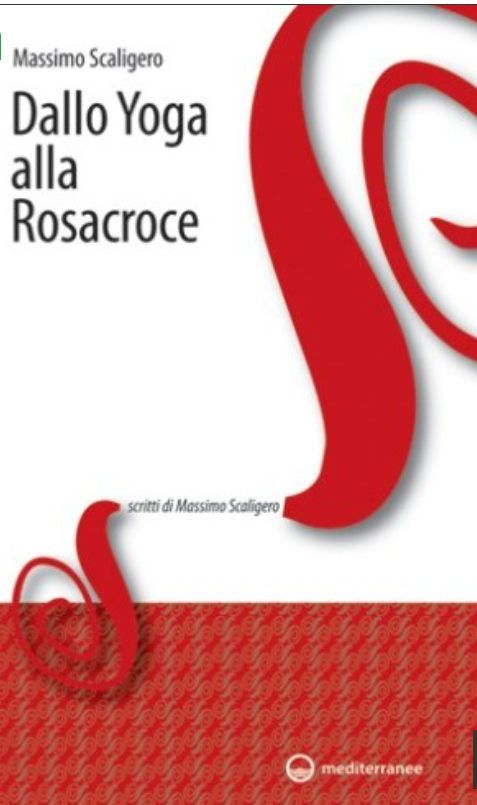
See reference below:

Comments